
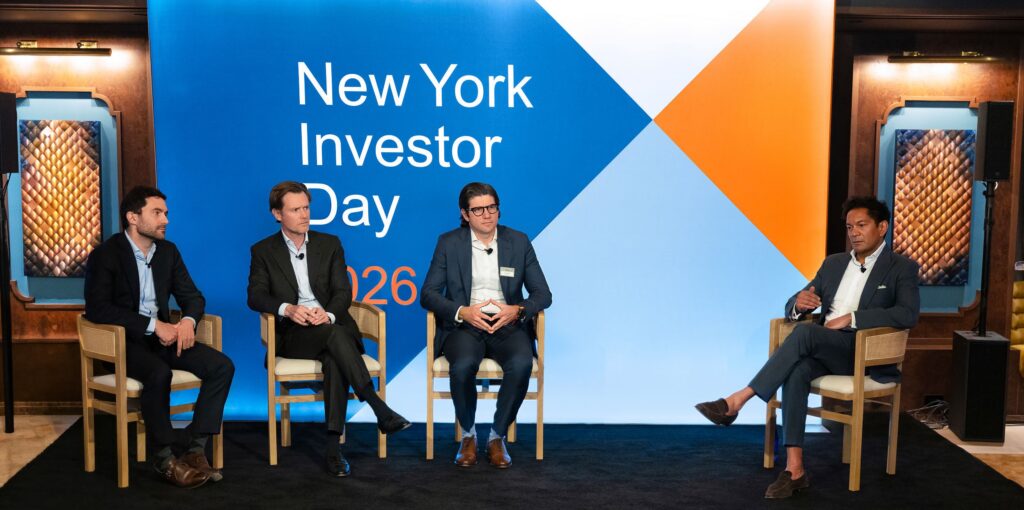
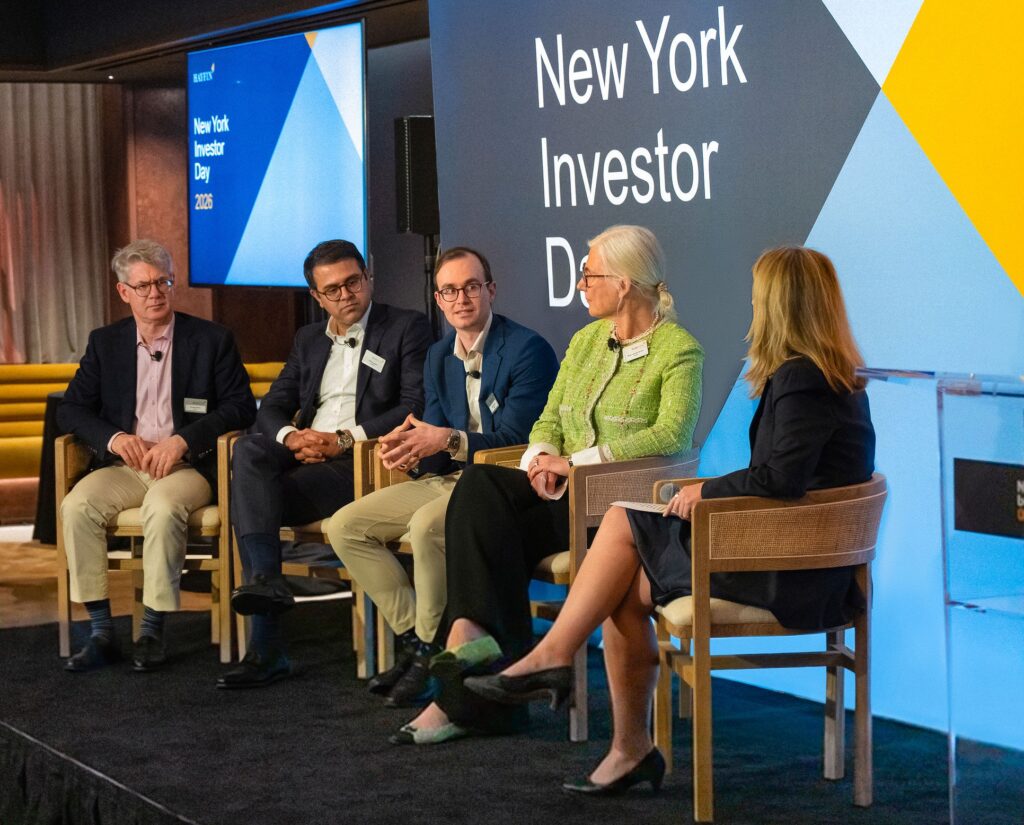
Last month, we welcomed over 90 investors, partners, and colleagues to 10 Grand Central for what turned out to be a truly memorable day. The world had intervened in the weeks before in a way that gave every conversation an urgency and an honesty that can be hard to manufacture in a well-rehearsed agenda.
But the event really started the evening before when we hosted a dinner for a group of our limited partners – a deliberately smaller, less structured setting than what was to follow. No presentations, no panels. Just conversation. We wanted to hear directly from investors: what was on their minds, what was worrying them, what they needed from us that we weren’t yet delivering. The conversations that evening were candid in a way that only happens when there’s no agenda. They shaped the morning that followed, with three themes – portfolio transparency, views on AI disruption across our own portfolios, and the durability of European private credit – resurfacing in a more structured form throughout the day.
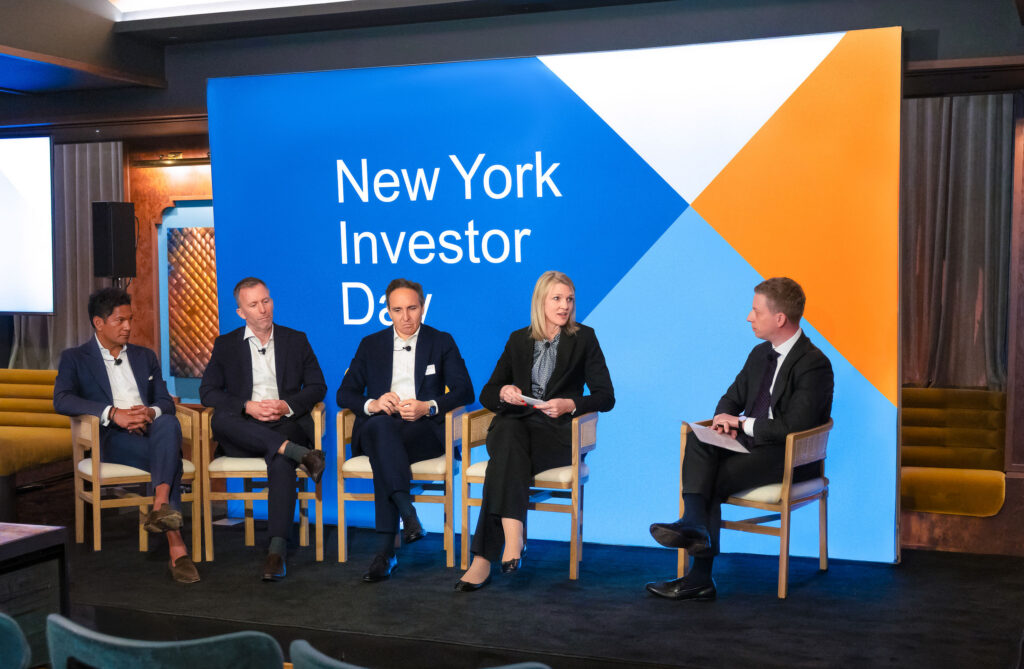
Our co-CEO Mark Tognolini opened the day and has written here about what’s been at the forefront of his mind in the opening months of the year. Let me give you a sense of what emerged – not panel by panel, but as the through-lines I kept coming back to across a genuinely substantive day.
The second-order effects are the underpriced story
After an opening session on the shifting macroeconomic environment, Jeff Currie picked up the threads from Andrew Sheets’ earlier framing and set out a clear way to think about commodities: physical markets clear today’s supply and demand, while financial markets price the future. The gap between the two – Brent at $120 in the physical market versus the low 80s in futures markets at the time – was not a rounding error. Markets were pricing a rapid resolution that did not square with the physical reality of bringing supply back on line; closed wells take months or years to reopen, not days.
What struck me wasn’t the headline oil disruption—that story was everywhere—but the second-order effects that rarely make the front pages. Nino Mowinckel walked through the specifics: over half of global seaborne sulphur trade transits the Strait of Hormuz, putting copper and nickel production at risk. Indonesia, the world’s largest nickel producer, imports around 75% of its sulphur from the Persian Gulf. Around a fifth of global refined copper output depends on sulphuric acid, while 24% of global fertiliser supply remained stuck behind the Strait. The inflationary impact may not show up until the second half, long after the headlines move on.
“The edge in European private markets is not price or leverage; it is the compounding advantage of being present in the right relationships for long enough that complexity becomes a differentiator, not a deterrent.”
Jeff Currie, formerly at Goldman Sachs and now running Energy Pathways at Carlyle, put a structural lens on it: the world that prioritised affordability and environmental credentials above energy security has been forced to reorder its priorities. His broader rotation thesis – from asset-light to asset-heavy, the “HALO” trade – felt less like an acronym and more like a description of what we have been quietly building for over a decade.
Complexity is a feature of our market, not a problem – if you’ve built for it
The edge in European private markets is not price or leverage; it is the compounding advantage of being present in the right relationships for long enough that complexity becomes a differentiator, not a deterrent.
40% of our Direct Lending book is originated through sole lender deals; the rest are typically clubs of two to three lenders. Stephen Badia’s argument was that European private credit still looks far more like an extension of banking than a convergence with the syndicated market, and that inefficiency can be both a structural return driver and risk mitigant. Rehan Jiwani quantified it: a clear premium available in Europe versus comparable US credits – alongside lower leverage, tighter documentation and smaller syndicates that preserve genuine lender control.
Healthcare, Maritime and Real Estate showed the same dynamic in specialist form. Andrew Merrill made the case that our platform generates continuous opportunities to finance a company across its lifecycle and that even transactions we have declined can build an edge in the future. Over several years, the Healthcare team reviewed three plasma product businesses across the EU and the US, which for various reasons did not result in an investment; instead, it set the stage for a future successful investment in the space. Hayfin underwrote an FDA-inspected plasma manufacturing plant that was still loss-making as it restarted post-shutdown – conviction built through years of accumulated diligence.
Hayfin’s Greenheart Management, our wholly owned ship management subsidiary, is the Maritime equivalent. There we have operational directors tracking fuel consumption per knot across every vessel. That operational credibility is what earns 5–20-year contracts from investment-grade counterparties. Duration requires trust, and trust is built through cycles, not just sharp terms on the day.
As punctuated by Carlos Colomer, within real estate markets, the difference between partnering and not often comes down to local presence and cultural nuance. We understand how an owner thinks about control, how they weigh optionality, and how they want a structure explained. We meet people where they are—literally and figuratively—and communicate terms in a way that feels natural and precise. In relationship-driven markets, that is not a detail.
The private credit stress is real, but the systemic risk framing is wrong
The “Private Credit at a Crossroads” panel met the questions LPs are rightly asking. The backdrop is tough – the weakest quarter for direct lending fundraising in three years; BDCs trading at a discount to NAV – and the panel didn’t pretend otherwise.
Carlos Pla drew a key line: the semi-liquid vehicles under the spotlight are roughly a quarter of a now $2 trillion+ global private credit market, with average leverage around 1.2x – figures that were dwarfed by the embedded risks that defined the pre-GFC banking market. The other three-quarters of assets sit in closed-end funds, structures built for patient, disciplined deployment designed to take advantage when others pull back. Our €7 billion of undrawn capital is the practical expression of that design.
Michaela Campbell pushed back on defaults as the headline metric: they are backward-looking, inconsistently defined across managers and often deferred through amendments. The better litmus is in leading indicators – interest coverage trajectories, PIK toggle usage, watchlist trends and amendment volumes. On those measures, Hayfin’s Direct Lending portfolio looks considerably healthier than the headlines. The watchlist has fallen by almost a third since YE-2023; weighted average interest coverage ratios remain stable across consecutive quarters; and the vast majority of interest remains cash-paid.
On AI disruption, our underwriting framework extends well beyond software. As Mark Bickerstaffe put it, every sector we lend into is subject to the same question: what are the second-order effects if AI changes the economics of the profession or sector this business serves? We take a “guilty until proven innocent” approach to each company’s resilience to AI risk. There are no clean answers yet – which argues for caution in exposed sectors, not urgency. Marc Chowrimootoo made a related point on fraud: the headline cases have been non-sponsored, inventory-backed trades, and fraud is not a private credit phenomenon so much as a human one. The discipline is screening bad actors before you lend, including walking away when terms look good, but the governance does not.
“The illiquidity in private markets is an opportunity, not just a problem.”
The afternoon session on illiquidity could have been a sobering inventory – significant inventory of legacy assets seeking an exit and average hold periods stretching out fund terms. Instead, it showed how flexible, patient capital, in the form of either credit or equity, can step in where the market has no ready solution. The toolkit across private markets is broader than many assume: dividend recaps, bridge-to-IPO financing, continuation vehicle support, minority stake buyouts and management-led buyouts of the sponsor itself.
Sponsors are increasingly reluctant to sell their best assets — and our Private Equity Solutions Strategy is built around that reality. As Vladimir Balchev put it, the priority is less about DPI than TVPI: sponsors want solutions that extend hold periods and build value, not just accelerate distributions. In the small and mid-cap segment especially, the constraint is not liquidity for star assets – it is time and growth capital. GP-led transactions are now a core tool for addressing both, not a last resort.
A consistent origination edge permeated the discussion: relationships built over years, portfolios mapped 12 to 18 months before a transaction and credibility earned through repeat execution. For many mid-market sponsors, the choice is simple: they back partners who have been in the room before, not those who show up only when the process starts.

On listening
In closing, Tim Flynn left the audience with a simple wish: that if investors take one thing away from Hayfin, it is that the firm is built to deliver client outcomes regardless of where we are in the cycle.
Tim’s framing connected directly to how the day had started, and to the dinner the evening before. We are deliberate about listening, creating an environment in which investors can tell us what they need, rather than simply what we had come prepared to tell them. That commitment is what made the panels as honest as they were about the challenges facing the asset class. Honesty of that kind is either native to a culture, or it isn’t. You cannot manufacture it for an investor day and quietly retire it on the way home.
Thank you again to everyone who joined us in New York. Your continued partnership genuinely matters to us.
When preparing to host Hayfin’s North American clients at our annual US AGM in New York last month, we knew three topics would be at the forefront of their thinking: software, retail redemptions and the Iran conflict. The discussion became a timely test of how private credit managers can demonstrate that they are the right partners to help investors navigate market volatility.
New AI models have triggered a repricing of business durability in the face of accelerating disruption, prompting LPs to examine their GPs’ exposure to potential losses in software, where private credit is often seen as heavily concentrated. At the same time, a surge in redemptions and gating in some US semi-liquid private credit vehicles has forced price discovery and raised the prospect of supply shocks. Finally, despite the fragile ceasefire reached in April, tensions in the Middle East continue to ripple through supply chains, commodities pricing and energy markets.
These three trends are playing out differently on either side of the Atlantic. In the case of the first two, the impact should in theory be more muted in Europe. Software is a smaller part of European lending than in the US, where it accounts for an estimated 20–25% of private credit activity. In Europe, higher-risk ARR lending to pre-profit software businesses with unclear paths to deleveraging is far less prevalent. Similarly, while retail capital has grown to 20–25% of global private credit AUM, withdrawals have been concentrated in US Business Development Company (BDC) and interval fund structures rather than in European vehicles, which are still relatively nascent.
But Europe is unquestionably more exposed to geopolitical risk – at least from the specific perspective of disruptions to energy supply and the resulting increase in inflation.
Is your money safe?
In all three cases, the first question that LPs should be asking their private credit managers is how they will preserve capital, protect value and limit downside risk within their existing portfolios.
We have previously explained why we remain underweight software across both our Private Credit and High-Yield & Syndicated Loans businesses. Our software exposure across Direct Lending portfolios is less than 6%, and below 5% in our latest vintage, which compares favourably with peers.
We have managed that exposure through prudent portfolio diversification and a clear view that software is not only potentially vulnerable to generative AI disruption, but also one of the most competitive parts of the market. Where we are invested, those loans are to large, mature, high-growth companies backed by sector specialist GPs. We have grounded our credit judgment in traditional credit metrics rather than uncertain enterprise value assumptions.
Uncertainty is not an environment we are waiting to pass. It is the environment we are built for.
We are similarly well placed on liquidity. Hayfin’s private credit strategies rely exclusively on fully locked-up institutional drawdown funds, with no retail capital. We had already been seeing growing demand for institutional vintage solutions that operate as drawdown vehicles, with redemptions achieved through natural portfolio run-off rather than forced asset sales. That trend now looks set to accelerate.
No manager, least of all one investing in Europe, can be fully insulated from the effects of conflict involving Iran. We saw during Covid and in the early stages of the war in Ukraine how shocks to energy, transport and agricultural supply chains can quickly spread through interconnected markets. Higher energy, fertiliser and freight costs would feed into food prices and create broader inflationary pressure.
Our dedicated Maritime team, with 15 industry specialists, more than $4 billion deployed and over 100 vessels acquired, gives us added insight into how global supply chains are being affected.
Where can managers create an edge?
The second question LPs should ask their GPs is how they are positioned to capitalise on these market dislocations. Throughout Hayfin’s history, periods like these have created the conditions for us to grow, gain market share, deepen relationships with borrowers and LPs, and deliver some of our best-performing investment vintages. Uncertainty is not an environment we are waiting to pass. It is the environment we are built for.
The obvious counterargument is that the private credit industry as a whole tends to gain market share from banks and syndicated markets during periods of disruption. The more important question, then, is what positions us to deliver compelling investment returns in a more uncertain environment relative to our competitors.
Our European focus is certainly an advantage. We consider ourselves the European home team, with 17 years of track record and a platform built to operate across fragmented jurisdictions, languages and legal regimes. The distinctive, longstanding opportunity set in Europe, as we have previously discussed, certainly still applies. There remains room for further growth, with the UK and EU’s combined GDP totaling 90% of the US, but with private markets just one third of the size. Additionally, as a shallower market than the US, Europe can reprice quicker in environments like this.
Hayfin’s adaptability and ‘one-firm’ culture, both of which I described earlier this year, are also well-suited for the current landscape. Our broad set of complementary strategies allows us to finance both growth and stress, and to lean into the parts of the market offering the best risk-adjusted returns, as this rapidly shifts around us. By operating in a de-siloed, integrated manner, when markets “flash amber”, we draw on the insights and experience of the whole team to re‑underwrite portfolios, reassess risks and recalibrate pipelines.
Recent market stresses will also affect future investment vintages. One potential second‑order effect of the recent strains in US private credit is that both LPs and borrowers will increasingly favour managers with more conservative approaches to fund structuring. US lenders might pull back from European markets, tipping competitive dynamics in favour of homegrown European managers with more institutional capital.
Patient capital – at scale
Many of the themes discussed here are only beginning to play out. We will remain patient, focusing first on supporting our existing borrowers as the market comes to us.
At the same time, we are preparing to invest selectively through our Tactical Solutions, Special Opportunities and Private Equity Solutions strategies. In these areas, choppier markets and a rising tide of €300 billion in net asset value without sponsor capital support are likely to drive demand for hybrid liquidity solutions.
With a significant undrawn capital position of c. €7bn today, we have the scale and firepower to capitalise on the opportunities that may present themselves in the months ahead.