
Healthcare has never been more essential, or more capital-intensive. An ageing global population, rising chronic disease burden, and a continued wave of scientific innovation are driving demand for therapeutics, devices, and services to record levels, largely independent of the economic cycle. Yet the capital available to fund this growth has not kept pace, leaving a widening gap between what the sector needs and what traditional financing can supply.
The tailwinds for specialist healthcare credit are clear:
- The global population aged 65+ is projected to double to 1.6 billion by 2050 and will drive demand for therapeutics, devices, and services largely independent of the economic cycle. This trend is even more pronounced in the US and the EU — Hayfin’s core addressable markets — where post-war baby boomers are now entering retirement age. By 2030, more than 20% of the US population will be over 65, driving structurally higher healthcare utilisation.
- Healthcare’s share of GDP has risen consistently across developed economies over the past five decades — tripling in the US from 6% to 18% since 1970, and more than doubling in Japan and the UK, a trajectory that has held through recessions, rate cycles, and successive policy changes.
However, the capital required to fund this expansion is not:
- While R&D investment has grown more than 80% over the last ten years, approximately 60% of this is self-funded by the top 20 pharma groups.
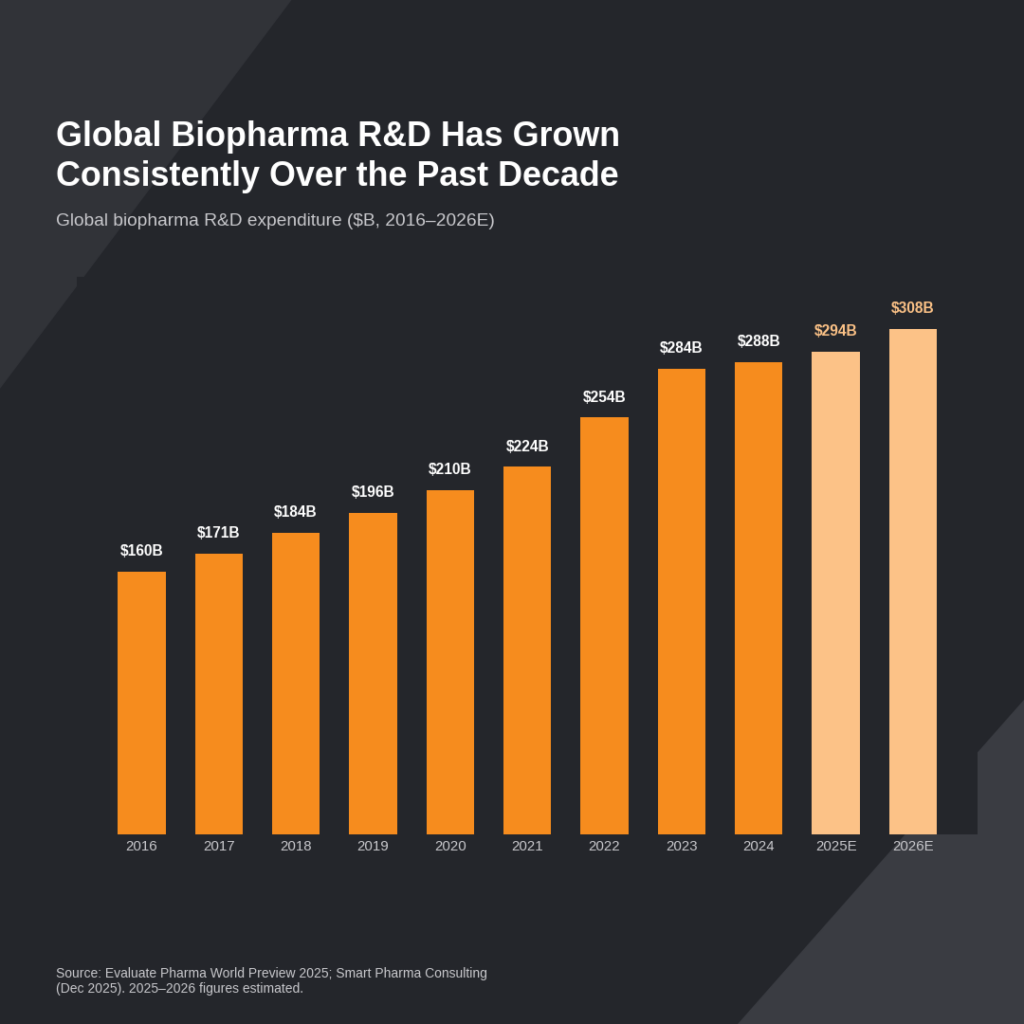
- The remaining 40% must come from smaller companies that do not have balance sheets capitalised by portfolios of established drugs and products — these require external financing to fund their pipelines.
External healthcare financing has been highly cyclical
- There has been a decline of 73% in external biopharma funding from its 2020–2021 peak to its 2022–2023 trough, and funding remains at around 52% of peak levels today.
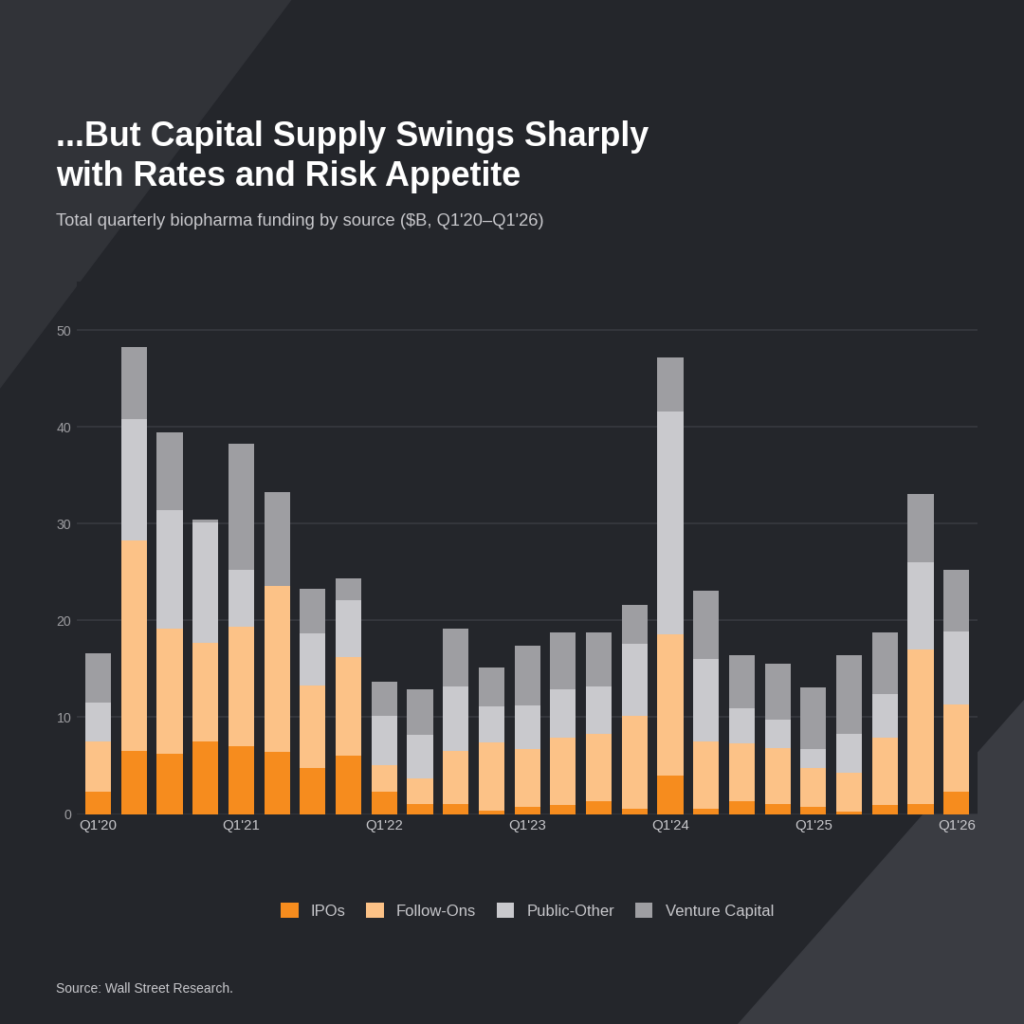
- Scaling healthcare companies with genuine assets and durable revenues are underserved: equity is too expensive or unavailable in the current environment, and traditional lenders are not yet accessible.
This is precisely where Hayfin’s Healthcare Strategy is designed to operate — providing flexible capital across the debt and equity spectrum, including equity capital replacement, mezzanine financing, and growth debt, with the sector expertise to underwrite complexity across biopharma, medical devices, and medical technology.